
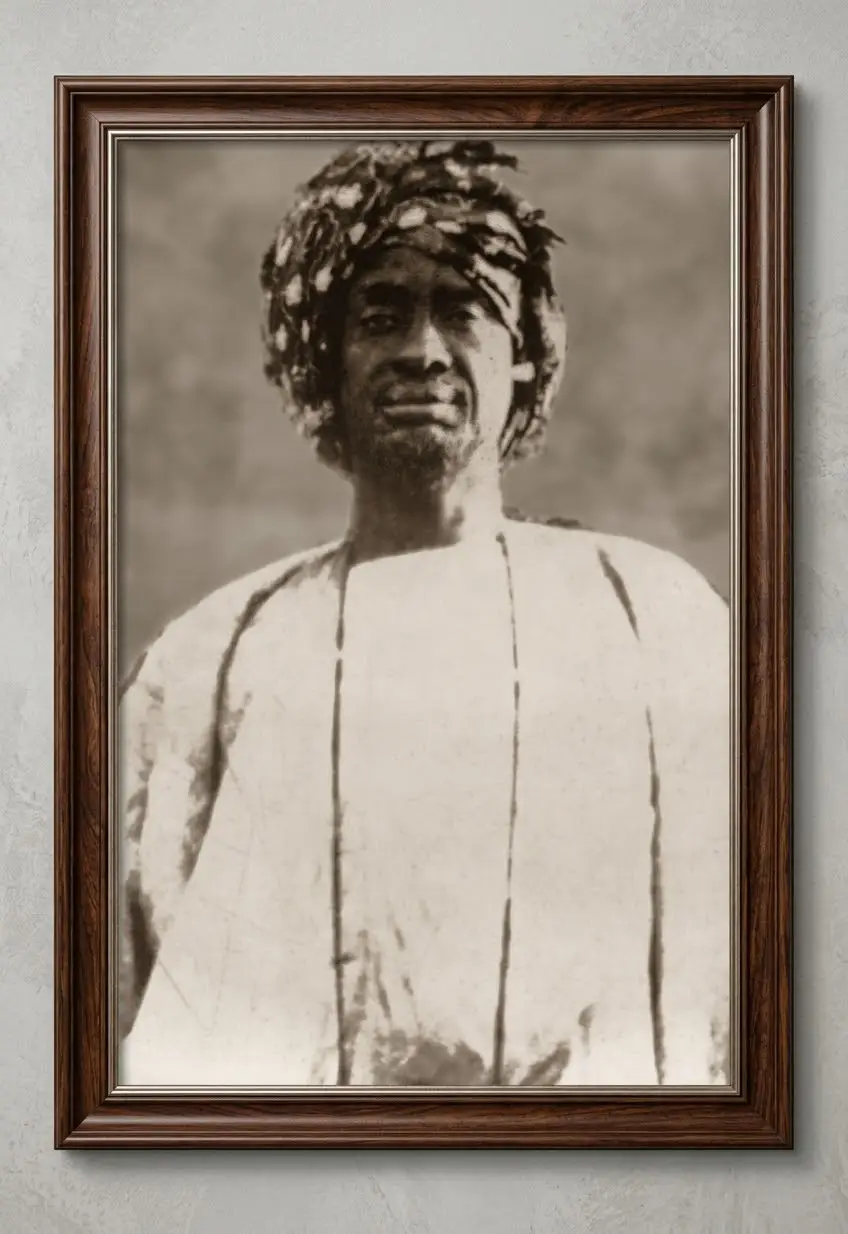
Cheikh Mouhamadou Moustapha Mbacké: The First Khalife of Serigne Touba (1927–1945)
Birth: a child of Darou Salam
According to Mouride hagiography, the first successor of Cheikh Ahmadou Bamba was born on the 11th of Muharram, 1306 AH, in Darou Salam, which corresponds to September 17, 1888.
History tells that his father had to be searched for when the child was born. At that time, the Cheikh often withdrew for long periods into the nearby forest, in search of the future site of the holy city of Touba. From his very first day, Cheikh Mouhamadou Moustapha’s life was bound to Touba and to the mission of his father.
A calm hand in the hour of grief
When the Servant of the Prophet returned to God on July 19, 1927, Cheikh Mouhamadou Moustapha once again showed the clarity of mind and self-control for which he was known. After personally confirming the death, he quietly arranged for the burial to take place in Touba, according to his father’s wishes.
He was named Khalife on July 25, 1927. From then on, his first duty was to carry the work forward, above all the construction of the Great Mosque of Touba, a project that was especially dear to the heart of Cheikh Ahmadou Bamba.
A Khalife of great intelligence and courage
The beginning of his khalifate was marked by difficulties of every kind. The hardest was the opposition of many dignitaries within the community.
Yet Cheikh Moustapha quickly proved to be a Khalife of great intelligence. He drew on a vast culture and an unwavering loyalty to his father’s teachings. Above all, he showed courage, dignity and generosity that would become legendary.
A father to his brothers and sisters
After the passing of their father, he took charge of the education of almost all his brothers and sisters. Many of them lived with him. According to the testimony of his own brothers, the Khalife spared no effort for their well-being. When they reached adulthood, he even chose their first place of residence, and he never failed to give them the material support they needed to begin their lives.
A man of action and a builder
Cheikh Moustapha was also an excellent administrator and a true man of action.
In 1928, he obtained the official registration of a 400-hectare plot of land in Touba. At the beginning of 1929, he requested permission to resume the construction of the Mosque. The work had been put at risk by the irresponsibility and greed of the Western administrator in charge of the project.
A long and complicated legal battle followed in the Paris courts. The administrator, Tallerie, unjustly won his case, and the Mouride community was forced to pay him the enormous sum of 250,000 francs in damages for breach of contract and losses.
Obstacles overcome
The construction of the mosque soon faced other serious obstacles:
- transport: there was no road or rail network to bring building materials to Touba;
- materials: resources such as laterite were scarce in the area;
- water: the water table lay more than 25 meters deep, which made water a critical problem for the building site.
None of this discouraged him. When the colonial authorities required a railway between Diourbel and Touba before construction could begin, Cheikh Moustapha had it built. He then began work on the mosque in 1932 and continued it until the outbreak of the Second World War in 1939. He returned to God in 1945, leaving the work to be completed by his brother, Serigne Fallou.
A debt of gratitude
Through his loyalty, his sacrifices and his work, Cheikh Mouhamadou Moustapha earned, according to Mouride tradition, the approval of the Prophet of Islam (peace be upon him) and of Khadimou Rassoul.
Even more, all those who today claim to follow the Servant of the Prophet, and anyone sincerely devoted to spreading the Word of God, owe a great debt of gratitude to this worthy founder of the edifice of faith and virtue.